

Leader of Self: The Foundation of Effective Leadership
Most leadership challenges don’t start with the team.
They start with the leader.
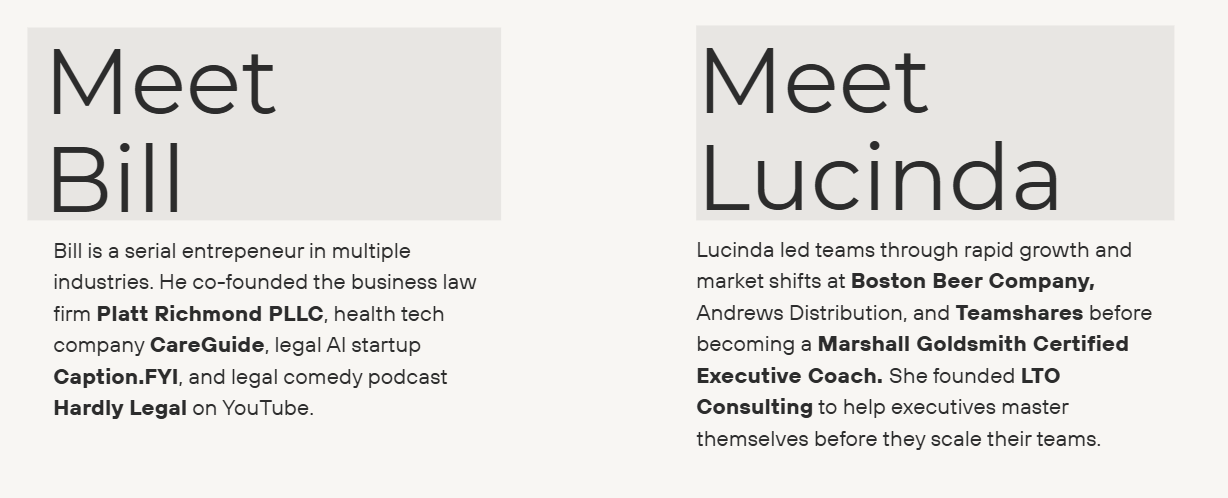
In LTO Consulting’s Leader of Self webinar, Lucinda Ochwat and Bill Richmond unpacked a truth many leaders avoid:
You can’t lead others well until you learn to lead yourself.
As companies scale, leaders often default to execution mode….more decisions, more urgency, more pressure. Without strong self-leadership, that pressure shows up as misalignment, unclear priorities, and
Why Self-Leadership Comes First
Early growth can hide leadership gaps. Sales are moving. The team is busy. But without internal discipline, leaders become the bottleneck.
Self-leadership is what allows founders and executives to:
Show up consistently under pressure
Make clear decisions without emotional drag
Create trust, stability, and direction for their teams
That’s where the Leader of Self Framework comes in. Download our toolkit HERE
The 4 Pillars of the Leader of Self Framework
1. Self-Awareness
Effective leadership starts with awareness.
Self-aware leaders understand:
Their default behaviors under stress
Their strengths and blind spots
How their presence impacts others
If you don’t know what you bring into the room, you can’t manage it.
This aligns with research from Harvard Business Review, which finds that leaders with high emotional intelligence are better at decision-making and influence under pressure.
🔗 Harvard Business Review: What Makes a Leader? Emotional Intelligence
2. Self-Regulation
Your team feels what you feel.
Self-regulation is the ability to:
Respond intentionally instead of reacting
Manage energy, not just time
Create space between stimulus and response
Calm leaders create focused teams. Reactive leaders create noise.
3. Clarity
Clarity is kindness.
Strong leaders:
Know their top priorities without hesitation
Set expectations so clearly they can’t be misinterpreted
Eliminate confusion by saying what matters—and what doesn’t
When leaders lack clarity, teams slow down. When leaders are clear, execution accelerates.
This reflects findings from Gallup, which shows that employees with clear expectations are significantly more engaged and productive.
🔗 Gallup: Employee Engagement : What’s the Real Story?
4. Courage
Direct is kind.
Leadership requires:
Having the hard conversations early
Making decisions instead of delaying them
Acting despite fear, not waiting for it to disappear
Avoidance doesn’t protect relationships — it erodes trust.
The importance of courage and direct communication is widely documented in leadership research. For example, authors of Crucial Conversations show that avoiding difficult conversations increases organizational risk and reduces trust.
🔗 Crucial Conversations: Tools for Talking When Stakes Are High
How the Pillars Work Together
The framework works as a system:
Self-awareness shows you what to address
Self-regulation gives you control over your response
Clarity focuses your effort
Courage turns insight into action
Miss one, and leadership effectiveness suffers.
Common Leadership Mistakes to Avoid
The webinar closed with a practical warning:
Don’t try to master all four pillars at once
Don’t confuse knowing with doing
Don’t skip self-awareness because it’s uncomfortable
Don’t wait until you “have time”
Start with one pillar for 30 days. Build the habit. Then stack the next.
Backed by Research
The Leader of Self framework aligns with established insights from leaders in organizational psychology and business performance, including Harvard Business Review, Gallup, and leadership research on emotional intelligence and clarity in teams.
What’s Next
The Leader of Self framework is the foundation for all leadership growth.
LTO Consulting is expanding this work through:
A live cohort experience
Ongoing leadership training and executive coaching- Schedule a call today!
Because the fastest way to change your team is still the same:
Lead by example.
